The Nature of Wood: Growth, Movement, and Renewal
Through the lens of Chinese medicine, the role of the Liver expands beyond an organ of detoxification to one that plays a central role in how we move, adapt, regulate, and respond to the world around us.
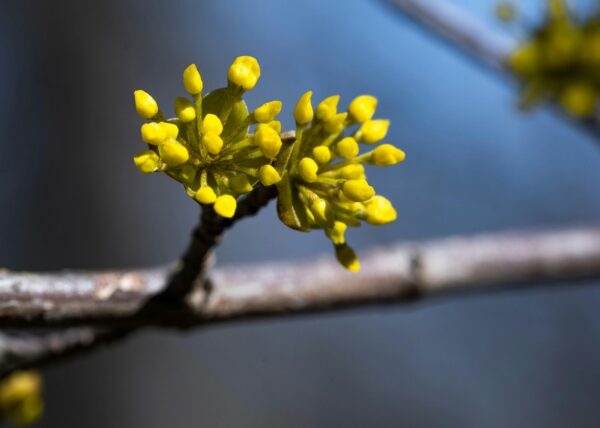
The Liver reflects a deeper organizing principle in the body and in nature associated with the Wood element. Wood is equivalent to the generative force of spring, representing growth, upward movement, and the impulse to begin again. It is the energy of a bud bursting through its seed and the surface of the earth, pressing through obstacles toward light. Its nature is characterized by expansion, movement, flexibility, and the drive to manifest potential into form. In classical Chinese thought, its essence is likened to that of an Ox: strong, enduring, pliable yet deeply determined. It carries forth the renewal aspect of life: an inherent momentum toward vision, expression, and forward motion. This nature of Wood is described as “bending and straightening,” the ability to yield or assert in response to changing external circumstances.
In the Huangdi Neijing, the classical text of Chinese Medicine, it is said, “All wind diseases with movement and dizziness are ascribed to the Liver.” Beneath these symptoms is an expression of counterflow: something moving contrary to its course; movement that has lost touch with its proper direction.
In the Korean Sa’am tradition of acupuncture, the quality of the Liver is likened to a cool, dense, dark forest; rich in yin and material substance, reflecting its emergence from the Water element. Within this environment, life is abundant yet not immediately visible; growth occurs quietly in the depths beneath the surface.

Jueyin Wind Wood: Simultaneous Closure and Emergence
The Liver belongs to the nature of Jueyin Wind Wood, alongside the Pericardium. Jueyin can be translated as “reverting yin.” It describes the withdrawal and contraction of yang qi back to its source in order for it to move outward toward the surface, like a tree withdrawing its sap from the branches back into its roots during winter.
From this deeply contracted state, as the system turns inward and consolidates its resources, Jueyin emerges as the driver of circulation, initiating movement from stillness and directing qi from the inner depths of the body upward and outward toward its furthest reaches. This withdrawal from external influence and return to source creates the conditions for new activity to arise. When rooted in this clarifying ground of essence, movement unfolds with coherence and ease, guided by an internal sense of direction rather than reactivity.
You can think of Liver Wood as the spark of life that emerges during the closing down of old life, from a cellular level to the natural world. The nature of Jueyin Wind Wood is the simultaneous closing down of old cycles at a deep, often unseen level, and the stirring of impulse from within that completion. It is the natural phase in which closure and emergence overlap.
This is clearly reflected in the onset of menstruation, where there is both an ending and a beginning. Menstruation is the concurrent release of yin substance that has completed its cycle, and the emergence of a new hormonal cycle already set into motion. Cramping, insomnia, fatigue or loose stools at the onset of menstruation marks a disruption in the Jueyin Liver mechanism.
The Liver as the Visionary and Director
Beyond its physical functions, the Liver is metaphorically likened to the “army general” of the body, responsible for vision, planning, and direction. It houses the state of our consciousness associated with dreams, imagination, and the capacity to move toward future possibilities. It knows when it is appropriate to advance and when it is appropriate to retreat.
Emotionally, it is associated with anger as the force of assertion and the drive to express one’s will. When Liver qi flows freely, we are in touch with clarity, creativity, and aligned action. When Liver qi is constrained, this can manifest as frustration, tension, or a sense of being stuck or unable to break through barriers (which can sometimes transform into depression). This can be mirrored in something as everyday as road rage, or as cyclical as premenstrual irritation. It can also show up as a sense of internal pressure, frequent sighing, tightness in the neck or shoulders, or the feeling of knowing what you want to do but having a hard time initiating it.
At its core, the Liver reflects our ability to drive our life forward in the direction we desire.

Overlapping Themes in Chinese Medicine and Biomedicine
There are meaningful parallels between Chinese and Western medicine that can deepen our understanding of the Liver, so long as each system is engaged within its own framework, allowed to retain its integrity. Rather than reducing one into the other, we can view them as describing a similar underlying intelligence from different perspectives.
The anatomical Liver is central to metabolizing carbohydrates, fats, and proteins. In Chinese medicine, this function is framed in terms of qi regulation, ensuring that metabolic processes occur smoothly and with coherence. When this flow of qi and blood is choppy, it can show up in everyday life as a state of internal rushing or a sense of racing against time: moving quickly without coordination, clumsily dropping objects, missing steps, or feeling frustrated by those moving at a slower pace. It can also show up as overriding basic bodily needs, like hunger or the urge to use the bathroom, pushing through with caffeine and continuing to work for hours before pausing to nourish the body.
The anatomical Liver helps regulate the transition between catabolism (breaking down molecules to release energy) and anabolism (utilizing energy to build complex molecules). This reflects the role of Jueyin Wood in Chinese medicine, where growth emerges from the closing down of prior processes. When this is disrupted, inconsistency in energy can take place: bursts of productivity followed by crashes, or difficulty sustaining momentum to produce something over time.
The Liver plays a key role in digestion by ensuring that qi moves and distributes properly, allowing the transformation of food and fluids to occur with a clear sense of direction. When this function is impaired, qi stagnation can arise, leading to symptoms like rib-side discomfort, bloating after meals, a sensation of fullness that lingers longer than expected, or a body that feels “stuck” in a process.
Similarly, the anatomical Liver plays a central role in regulating how nutrients are processed, distributed, and stored after digestion. When these processes are sluggish or inefficient, digestion can feel slow or incomplete, mirroring the same phenomenon as what Chinese medicine relates to qi stagnation.
From a biomedical perspective, the Liver’s role in digestion is also reflected in its production of bile, which is stored and concentrated in the Gallbladder, and then released into the Small Intestine to aid in the breakdown and absorption of fats.
In Chinese medicine, bile (Dan Ye) is understood as a refined or “excess” aspect of Liver qi that is stored in the Gallbladder, sometimes referred to as middle essence. Likewise, the Liver and Small Intestine are paired as clock-opposites, meaning that they share an axis of balancing two opposite functional gestures in the body.
The Liver also participates in the movement of information throughout the body; hormonal and neurological communication that allows different systems to remain in dialogue with one another.
The smooth flow of both hormones and neurons can be understood as intertwined with the Liver’s regulatory and communicative functions. Hormones act as carriers of systemic messages, while the nervous system communicates both globally and locally through the brain and tissues. These systems operate within a dynamic feedback loop with the body’s metabolic processes.
Transformative activity, associated with the Shaoyang Gallbladder and San Jiao, supports and stabilizes communication, while communication, governed by the Jueyin Liver and Pericardium, directs and modulates these processes.
The Liver also plays a central role in venous circulation and regulation, acting as a kind of internal strategist. It regulates the storage and release of blood, directing it outward during activity and storing it inwards during rest. This is mirrored in its anatomical function as well; the Liver produces key blood proteins such as albumin, which help regulate fluid balance and circulation.
A Bridge Between Potential and Action
The Liver enables vision, creativity, and forward movement in life, reflecting the nature of Wood as both the force of growth and the pressure that builds when expansion is blocked.
When the movement of Liver qi is dulled, it may present as depression or a lack of initiation. When constrained, it can give rise to irritability, frustration, or tension. When excessively surging upward, it may appear as a short temper, headaches, high-pitched ear ringing, or bloodshot eyes.
Healthy Liver function reflects the innate intelligence of knowing when to move forward and when to rest. When the Liver is regulated, there is smooth circulation, efficient digestion, emotional ease, and a clear sense of direction. When its function is strained, it may express as tension that can’t find an outlet, ideas that don’t translate into action, or a subtle disconnect between intention and how we exert ourselves in the world. Sometimes, what we experience as frustration may reflect creative potential at our root that is yearning to be brought into motion, pressing toward expression.
Ultimately, the Liver is not simply an organ of detoxification, but a central coordinator of movement, transformation, and direction within the body. Like plants arising from the soil of composted life, as processes come to a close, the Liver initiates the movement of qi toward emergence, animation, and rebirth. It serves as a bridge between potential and action, inner vision and outward expression.
Leave a Reply